
Water Goals

GOAL: Reduce growth adjusted potable water consumption by 36% by 2025 compared to the three-year average baseline of 2006-2008.
STATUS: Achieved
Campus Performance Overview
-
From 2007 to 2019, per person water usage decreased by 37%.
-
About half of the water consumed on campus is domestic (toilets,urinals, showers, and faucets), divided equally between residence halls and all other campus buildings. Low flow toilets and showerheads are standard fixtures in campus residence halls.
-
Over 90% of irrigation systems are automated and connected to a weather station. The Law Building, Eshleman Hall, and Chou Hall employ stormwater capture for either irrigation or in-building reuse.
Drought Response
Water is an increasingly scarce resource in California due to population growth and drought. In past years, the East Bay Municipal Utility District has implemented plans to reduce regional water use. The importance of water conservation becomes even more evident when one analyzes the energy consumption associated with the transportation and treatment of water. With the increasing prevalence of drought in California, the campus is proactive responding by fixing leaks and promoting behaviors that reduce overall water consumption:
Water

The campus is on track to meet the 2025 goal.(Water use remained below pre-pandemic levels but in 2022 rose over 2021, an increase likely related to the return to campus.)
STARS Performance Overview
Water Category
According to STARS, "This subcategory seeks to recognize institutions that are conserving water, making efforts to protect water quality and treating water as a resource rather than a waste product. Pumping, delivering, and treating water is a major driver of energy consumption, so institutions can help reduce energy use and the greenhouse gas emissions associated with energy generation by conserving water. Likewise, conservation, water recycling and reuse, and effective rainwater management practices are important in maintaining and protecting finite groundwater supplies. Water conservation and effective rainwater management also reduce the need for effluent discharge into local surface water supplies, which helps improve the health of local water ecosystems."
STARS notes that, "This credit is weighted more heavily for institutions located in areas of water stress and scarcity and less heavily for institutions in areas with relative water abundance."
Berkeley's STARS Performance
Total Points Available: 6.00
Water Points Claimed: 5.82
-
UC Berkeley achieved 97% of available points in the STARS Water category. The average among all research universities is ~50%.
-
In response to multiple years of drought, UC Berkeley has deployed water-saving strategies that have lowered per-person water use to some of the most efficient levels in the country.
-
The campus scored full points in the STARS Rainwater Management field due to implementing Low-Impact Development rainwater practices for all new construction.
-
UC Berkeley follows a Campus Stormwater Management Plan that monitors water pollutants released by university operations not related to construction.
Research
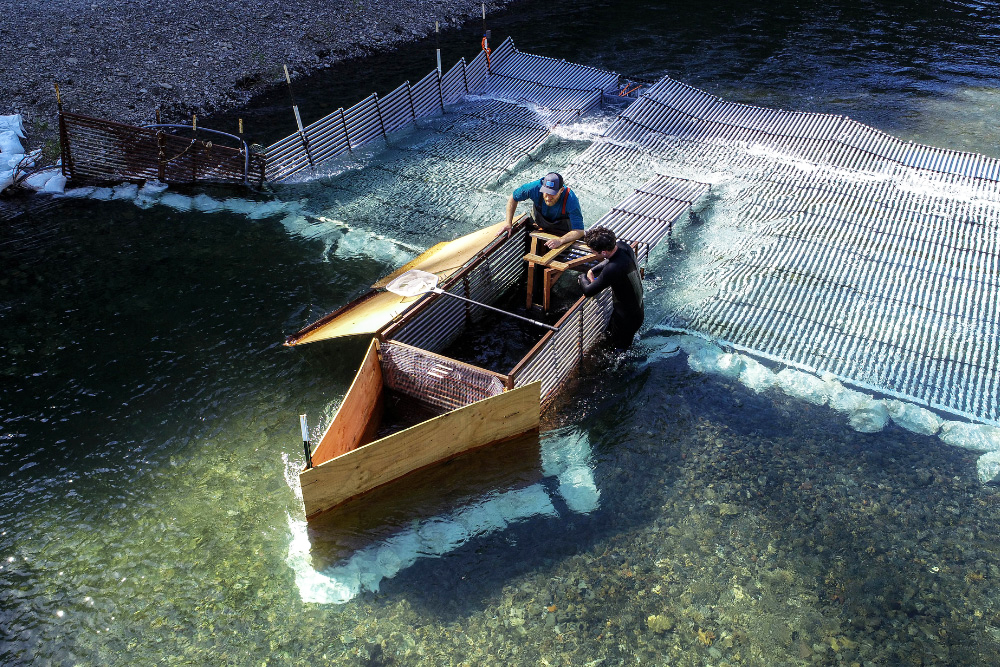
Steelhead, trout, and other salmonid species in northern California’s Eel River watershed have been threatened by pikeminnows over the past half century. To learn how UC Berkeley research is helping the salmonids, read about the efforts of research scientist Gabe Rossi and postdoctoral researcher Phil Georgakakos, who work in the lab of Cooperative Extension Professor Ted Grantham and with freshwater advocacy group CalTrout.
Interested in water?
Students, postdocs, and staff researchers working on water-related studies at UC Berkeley may affiliate with Berkeley Water Center
The Water Sustainability Research and Opportunities Portal provides and easy pathway to find courses about water from different departments, faculty members with a water sustainability research focus, and opportunities for funding or professional training.
Water Highlights
-
New construction and major renovation projects will maximize the number of water use reduction credits as part of the LEED™ certification process.
-
UC Berkeley is releasing a Resilient Water Plan. This plan includes strategies to lower potable water use through comprehensive conservation and efficiency measures for buildings, mechanical systems and campus grounds. It also evaluates adding water reclamation and reuse to the campus as well as updated stormwater and green infrastructure requirements.
CALIFORNIA IS EXPERIENCES ONGOING DRY CONDITIONS - SAVING WATER IS OUR NEW NORMAL.

Download a flyer on tips for saving water
See more on the campus drought response.