MAP |
Climate and Energy Overview

Energy & Climate Goal

Total Greenhouse Gases
 

Energy Usage Down, GHG Emissions Up

The results of the preliminary UC Berkeley 2010 Greenhouse Gas Inventory reveal an increase in greenhouse gas (GHG) emissions of 0.8% or about 1,400 metric tons CO2e (carbon dioxide equivalent) relative to the 2009 inventory. Even with this small increase in 2010, emissions are still almost 5% below 2008 levels. Electricity use in 2010 is down 1.1% on the main campus and 1.5% overall relative to 2009.

Plans

The 2009 and 2010 greenhouse gas emissions inventories will be reported to The Climate Registry and third-party verified. The CalCAP (Cal Climate Action Partnership) Steering Committee will continue to evaluate measures to meet the 2014 target, including the possible use of renewable energy credits and carbon offsets. Project implementation progress will continue to be documented on the CalCAP website.

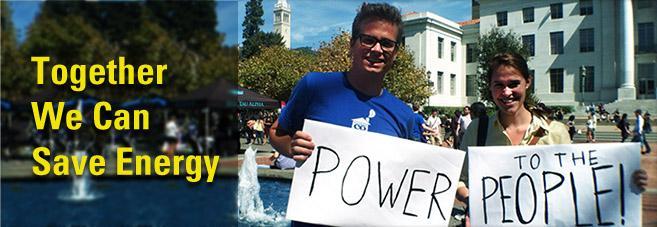
The first phase of the Operational Excellence Energy Management Initiative has been funded by campus, and is expected to yield $3-4 million in additional annual energy savings. A high-profile Energy Office will be tasked with overseeing many of the new initiatives and services being proposed. This Office will ensure ongoing commissioning of buildings and will work with existing Facility Managers to speed energy-related repairs and identify conservation measures/reduction projects. A companion program will provide financial incentives to reduce user-controlled electrical consumption by sharing energy savings with Operating Units. Another component is a campus ‘save energy’ outreach campaign to change individual behavior, aiming to make energy usage more visible and creating interesting, compelling, and consistent messages. The Energy Management Initiative will also establish and strengthen the campus energy policy to provide the administrative context for conservation.

Campus Installs 800 Exterior LED Lamps

Another SEP project changed the lights in all of the iconic exterior lampposts (approximately 800 fixtures) from metal halide bulbs to a LED array, a significantly more energy efficient and longer-lasting technology. The wattage in these fixtures dropped from 175 to 40 watts. The exterior lights are controlled by photocells and are operational only during the nighttime, but are used 365 days per year. This change will result in energy savings of almost 520,000 kWh and an annual cost savings of around $55,000. At the same time, the light is considered better, safer, and sharper – check them out the next time you’re on campus at night.

Photo credit: Judy Chess


Cal Energy Corps Offering Sustainable Energy Internships

Launched in February 2011, Cal Energy Corps will send more than a dozen undergraduate students to places around the world each summer for internships focusing on sustainable energy and climate change. Participants spend up to ten weeks working with partner organizations either in the United States or overseas, contributing their talents to real-world projects. Projects this year range from studying the urban heat island effect at the Chinese University of Hong Kong, to focusing on biofuels from algae at the Indian Institute of Technology in Kharagpur.

Photo credit: Roy Kaltschmidt


Energy Usage & Greenhouse Gas Emissions at UC Berkeley, 1990-2011

1990
1995
2000
2008
2009
2010
2011
Total greenhouse gases
(metric tons CO2eq.)
163,646
168,318
245,587
201,712
188,959
190,390
183,339
- GHG Scopes 1&2
114,616
122,466
202,487
157,058
148,877
148,774
143,609
Electricity (kWh)
157,105,948
171,709,091
185,666,952
217,841,461
218,515,767
215,307,772
212,878,439
Steam (MMBtu)
806,868
854,475
895,830
1,005,349
978,854
1,000,442
1,061,668
Natural Gas (MMBtu)
156,301
162,123
155,331
221,141
219,401
202,515
234,432
Renewable energy (kW)
100
100
100
100
Renewable energy credits
(metric tons CO2)
136
396
205
Greenhouse gases: "Total greenhouse gas emissions" (the basis for the campus reduction goal) includes Scope 1,2,&3 emissions. "GHG Scopes 1&2" includes direct and indirect emissions only (and excludes optional Source 3 emissions sources). Main changes are the use of different electricity emissions factor for years 1990-1997 and an updated water emissions methodology.
Electricity: For years 1990-1997, the campus has adopted the PG&E utility specific emissions factor developed through a 2002 LBNL study commissioned to provide technical assistance to the California Climate Action Registry and the California Energy Commission.
Renewable energy: Onsite renewable energy (kW) represents a photovoltaic installation on the Student Union and a solar thermal installation at the Maximino Martinez Commons.
Renewable energy credits: Credits purchased from third party to offset electricity emissions.
Source: 2012 Campus Sustainability Report

UC Berkeley Emissions by Source, 2009

UC Berkeley 2009 Emissions by Source

Learn More about campus climate and energy goals and strategies.


CAMPUS CLIMATE AND ENERGY RESOURCES

  • Cal's Climate Action Partnership (CalCAP): A collaboration of administrators, faculty, staff and students working to reduce greenhouse gas emissions at UC Berkeley.
  • Strategic Energy Plan (SEP): Focuses on 200 energy efficiency retrofit projects in campus buildings - especially lighting and HVAC improvements and commissioning measures.
  • UC/CSU/IOU Energy Efficiency Partnership: A state-wide energy efficiency program designed to permanently reduce energy usage in higher education buildings.
  • Green Buildings Projects: Green building projects on campus work to reduce building impacts on human health and the environment.
  • Green Building Practices: Green building maintenance, utilities, cleaning, and waste reduction practices at UC Berkeley  
  • Building Sustainability at Cal: Student facilitated classes that address the environmental impacts of campus buildings and have a service learning component.
  • Green Campus: A student led energy efficiency campaign to educate students, staff, faculty, and the local community on the importance of energy conservation and achieve real energy savings.
  • Green Departments: Green Department Certification is a new program offered at UC Berkeley to identity and recognize departments on campus that have taken extra steps to have greener operations and lower their environmental footprint.
  • Photovoltaic Power: Information on the 59 kW PV system on the roof of the Martin Luther King Jr. Student Union Building.
  • Energy and Resources Group: An interdisciplinary academic unit whose mission is to develop, transmit and apply critical knowledge to enable a future in which human material needs and a healthy environment are mutually and sustainably satisfied.
  • Renewable and Appropriate Energy Laboratory: RAEL focuses on designing, testing, and disseminating renewable and appropriate energy systems.
  • Energy@Berkeley: Leading the way on finding solutions, the University of California, Berkeley, and Lawrence Berkeley National Laboratory are pooling their vast expertise in energy technology, policy, and transportation to help achieve an affordable, sustainable and clean supply of global energy.
  • UC Berkeley Green Computing: An effort to raise awareness on the subject of energy usage associated with information technology on the UC Berkeley campus and to collaborate on the reduction of energy usage.
  • Berkeley Dashboards: This website allows you to track and compare water electricity usage at various buildings on Berkeley's campus.
  • Climate and Energy Classes: the campus offers over 100 energy and climate related courses.