MAP |
About Sustainability Overview

Campus Commitment to the Environment

“Two years ago, I announced the campus's greenhouse gas emissions reduction target of achieving 1990 levels by 2014. By compiling our sustainability goals and strategies and addressing a broad range of environmental aspects, UC Berkeley is planning for the future and setting the bar higher.”

UC Berkeley Chancellor Robert Birgeneau (2009 Campus Sustainability Plan, July 2009)


UC Berkeley intends to be a leader on environmental issues and to promote action and awareness through educational and research activities. This commitment – formalized in the 2007 Statement of Our Commitment to the Environment – includes:

• Protecting and enhancing the campus environment;
• Purchasing environmentally preferable products, minimizing the use of toxic substances,
and handling wastes responsibly;
• Conserving natural resources through their sustainable use in building projects,
transportation, and campus operations;
• Significantly reducing campus greenhouse gas emissions;
• Conducting innovative research on sustainable technology and practices;
• Increasing awareness of these values through instruction and example; and
• Collaborating with a diverse and engaged campus community on these issues to help
fulfill the University’s mission.

Concrete and measurable goals are necessary for ensuring real progress toward sustainability. At the same time, implementation of these goals will require connecting this larger vision of sustainability to daily actions, in ways that ensure a better final result or outcome. UC Berkeley can develop a new paradigm for implementing sustainability on campus - simultaneously reducing the resource footprint of the campus and improving its economic bottom line.

Successfully achieving campus sustainability goals will result in rethinking business as usual. A new approach to campus activities should embrace basic values of maximizing efficiency, eliminating waste, and generating positive returns - either as direct cost savings or other intangible benefits like more comfortable classrooms or time-saving technology. "Going green" should entail minimizing the amount of electricity or water used without decreasing the quality or quantity of education, research, or administrative operations. Better yet, sustainability should actually ensure an improved outcome. Work can be done better by streamlining processes, empowering the work force, and avoiding 'work arounds' (fixing problems without fixing the process that produced it).

sus.tain'a.bil'i.ty n.

the ability to meet the needs of the present while living within the carrying capacity of supporting ecosystems and without compromising the ability of future generations to meet their own needs

-Chancellor's Advisory Committee on Sustainability

UC Berkeley is guided by a both a broad definition of sustainability and a commitment to transparent reporting. While the annual campus sustainability reports concentrate on transparency for traditional environmental indicators - like energy and water usage and recycling - UC Berkeley separately reports on social and economic measures of sustainability. These additional gauges of sustainability are reported through the University of California Accountability Report, first published in May 2009. Designed to "ensure greater accountability across the UC system," the report includes four environmental sustainability indicators as well as data on undergraduate affordability and access, student experience and profiles, and research, budget, and finance.


Campus Sustainability Achievements

Energy & Climate
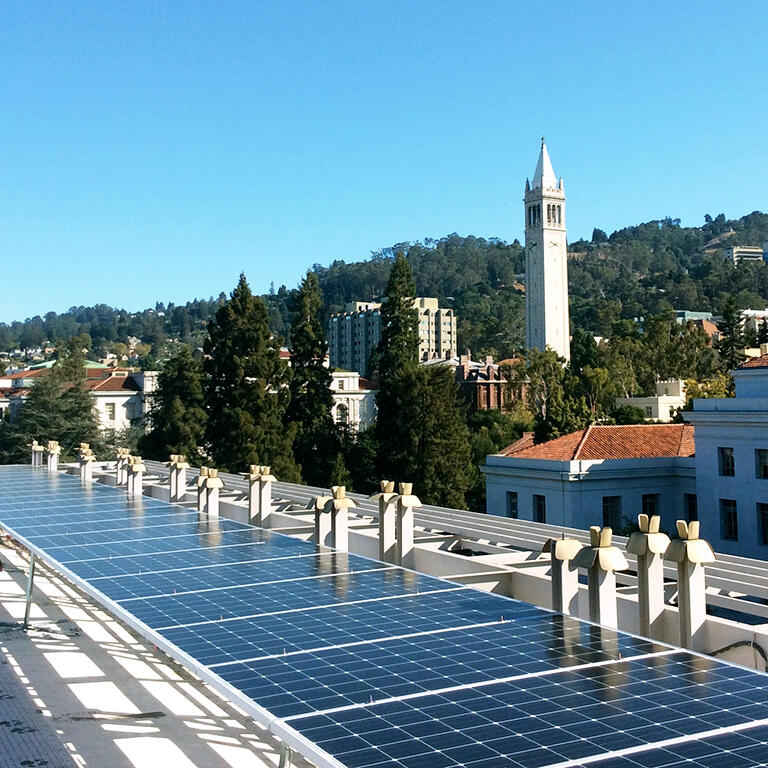
The University has made great progress on climate action by completing an inventory of greenhouse gas emissions (GHG) and formalizing its commitment to reduce these emissions to 1990 levels by 2014.  The campus will meet its 2014 target through a series of mitigation strategies including energy efficiency projects, installation of on-site renewables, reducing fuel usage by the campus fleet and commuters, and educational projects led by students aimed at changing behavior. So far, strategies are working. Campus greenhouse gas emissions were down by 4.5%- reaching its lowest level since 2005. 

Water
Even without a campus-wide water conservation target campus consumption has dropped by almost 20% since 1990. More notably, usage per capita has dropped by over 36% since 1990. Most of this improvement can be attributed to the increased efficiency of irrigation, implementation of building codes related to low-flow fixtures, and improvements during building renovations. Tap water campaigns have reduced bottled water sales by at least 25%.

Green Buildings
The campus now has 5 Leadership in Energy and Environmental Design (LEED) certified building projects. The campus has plans to certify eighteen more buildings under the New Construction (NC), Commercial Interiors (CI), or Existing Building Operations and Maintenance (EBOM) standards. The campus employs a variety of sustainable maintenance practices including green cleaning methods and non-toxic methods to control pests. Student-run Building Sustainability @ Cal has developed additional sustainability plans for at least 25 campus buildings.  

Waste
UC Berkeley’s current solid waste diversion rate is 42% (excluding construction waste). Waste going to the landfill dropped by 12% in 2009 while per capita waste has dropped by almost 30% since 1990, while the amount being recycled and/or composted has more than tripled.

Purchasing
The campus spent $6.1 million spent on green purchasing from 2008-2009. Two-thirds went towards Energy Star and/or EPEAT certified electronics, and one-quarter went to recycled-content offices and supplies.

Transportation
Since 1990, the campus has reduced the amount of fuel used in fleet vehicles and during faculty, staff, and student commutes by at least 28.7%. This met and exceeded our goal of 25%. 100% of fleet vehicles purchased this past year were green, bringing the green fleet to almost 18% of the total.%. Campus Bicycle Plan has increased riders by 20% in four years (5,100 daily riders).

Food & Dining
The University of California system has recently adopted a new policy on sustainable foodservices practices. Cal Dining has increased its percentage of sustainable food purchases by almost 3 points in the past year (26.8%, exceeding the campus goal). Nearly all plastic trays have been eliminated, and Cal Dining offers 100% organic salad bars in all four dining commons and has also partnered with "Buy Fresh Buy Local”.

Land Use
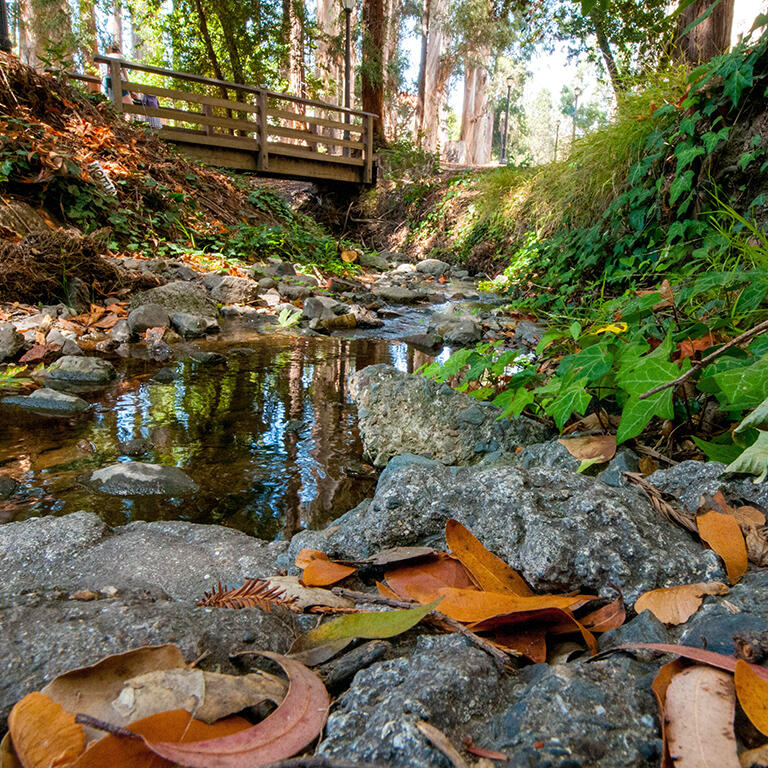
The campus has implemented projects to improve stormwater quality and reduce runoff.   Projects have diverted parking lot runoff through a series of vegetated treatment systems to reduce the pollutants and sections of the riparian corridor have been restored by removing invasive species and planting natives. In June 2009, Physical and Environmental Planning finalized amendments to the UC Berkeley 2020 Long Range Development Plan, Sustainable Campus chapter, to codify existing commitments to reduce campus contributions to climate change.

See more about UC Berkeley’s sustainability goals and metrics in our most recent Sustainability Report and Climate Action Plan.

See UC Berkeley's Campus Sustainability Timeline.

See UC Berkeley's Sustainability Awards and Honors.

Find out more about sustainability at the 10 UC campuses and the Office of the President and view the UC Policy on Sustainable Practices


Learn More about across-campus goals and statistics.


CAMPUS SUSTAINABILITY RESOURCES & DOCUMENTS